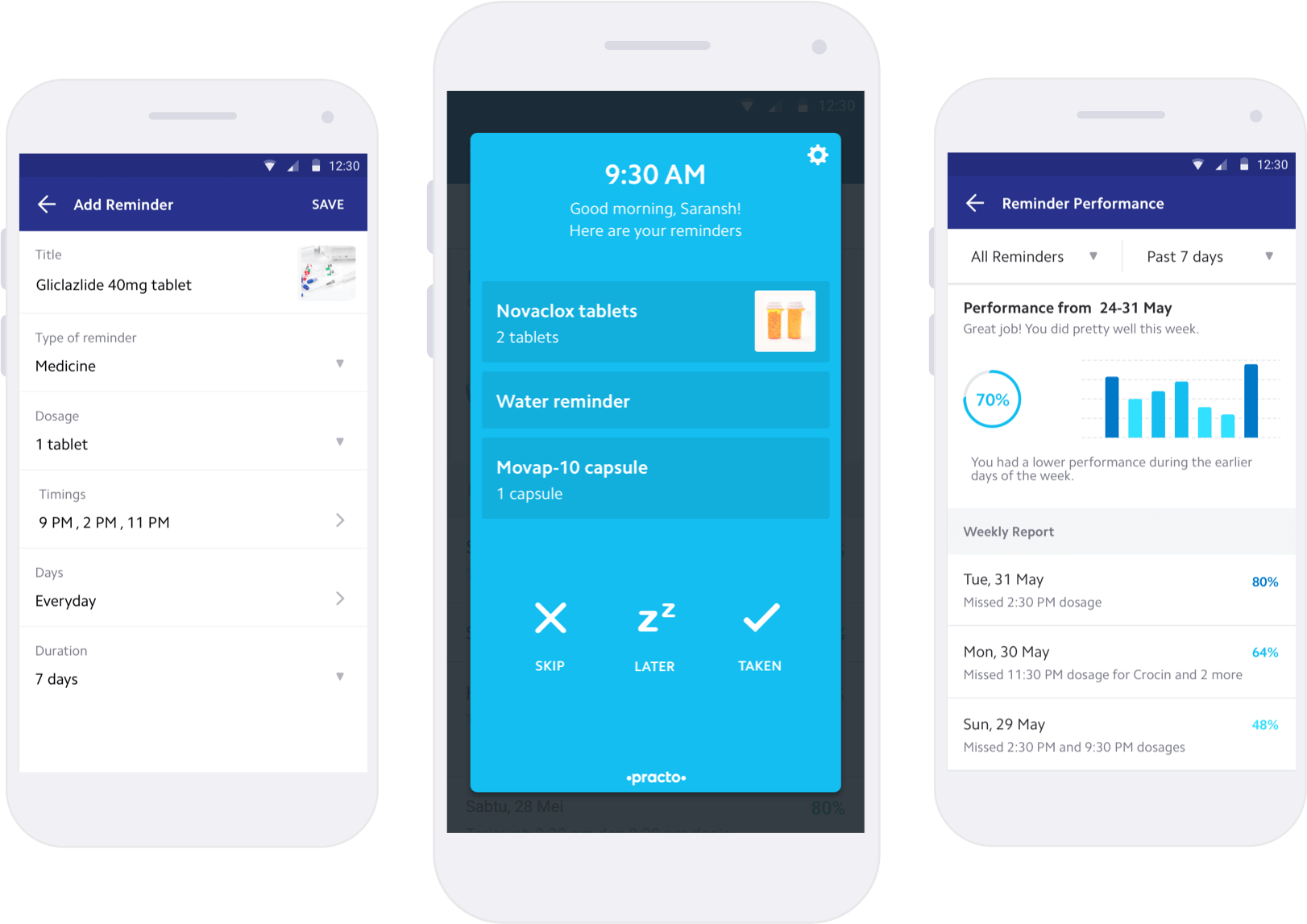
Over half of India's population takes prescription medication daily, yet forgetting a dose remains the leading cause of non-adherence. I designed Practo's medicine reminder system from the ground up, turning the prescription data already flowing through the platform into automatic, zero-setup reminders for patients. The feature shipped to millions and became one of Practo's most-used products with over 200,000 reminders set.
The problem
52% of Indians take prescription medication routinely. For chronic patients managing diabetes, hypertension, or thyroid conditions, a missed dose is not just an inconvenience. It disrupts treatment efficacy, increases hospital readmissions, and costs the healthcare system billions annually.
Practo's support tickets and app feedback told a consistent story: chronic patients, migrant patients, and caretakers were all asking for the same thing. A way to remember their medicines. The data confirmed what users were saying. The leadership team greenlit the project, and I pushed to ensure we understood the problem deeply before rushing to build.
Understanding behavior
I conducted contextual inquiries with patients and caregivers, observing how they bought, stored, and took their medicines in their homes and daily routines. Surveys supplemented the qualitative findings with scale.
The research surfaced behavioral patterns that no existing product was adequately addressing:
- Patients place medicines in visible locations (kitchen counters, bedside tables), relying on environmental cues rather than any system.
- Family caretakers serve as the primary reminder mechanism. Some patients had lost their prescriptions entirely and could not recall dosages.
- 20% had tried smartphone alarms but found them rigid and lacking medication context. The alarm does not know which pill, what dose, or whether it has already been taken.
- No patient remembered medicine names after a week. They identify pills by color, shape, and packaging.
- The moment patients leave home, every environmental cue disappears, and so does adherence.
The competitive landscape
I mapped existing solutions across physical and digital products to understand where the market was failing.
Physical products
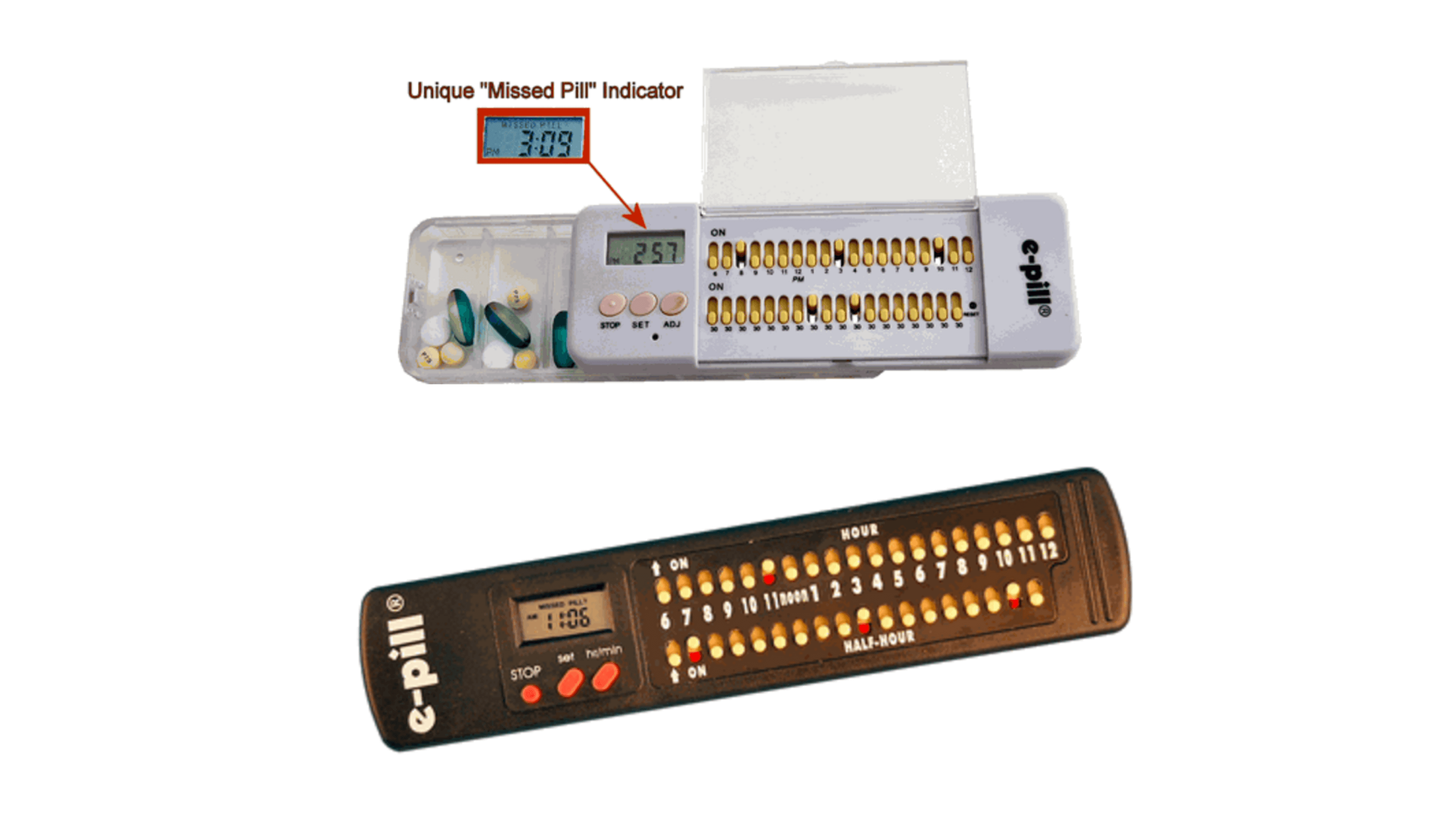
Devices like Epill and timer-cap bottles function as triggers but carry steep limitations: no dosage information, prohibitive cost (up to $250), complex setup, and zero intelligence. Most were designed for Alzheimer's care, not the everyday chronic patient.
Digital apps
According to Stawarz, Cox, and Blandford (2014), 229 mobile apps function as medicine reminders. I evaluated the top-rated ones across Android and iOS.
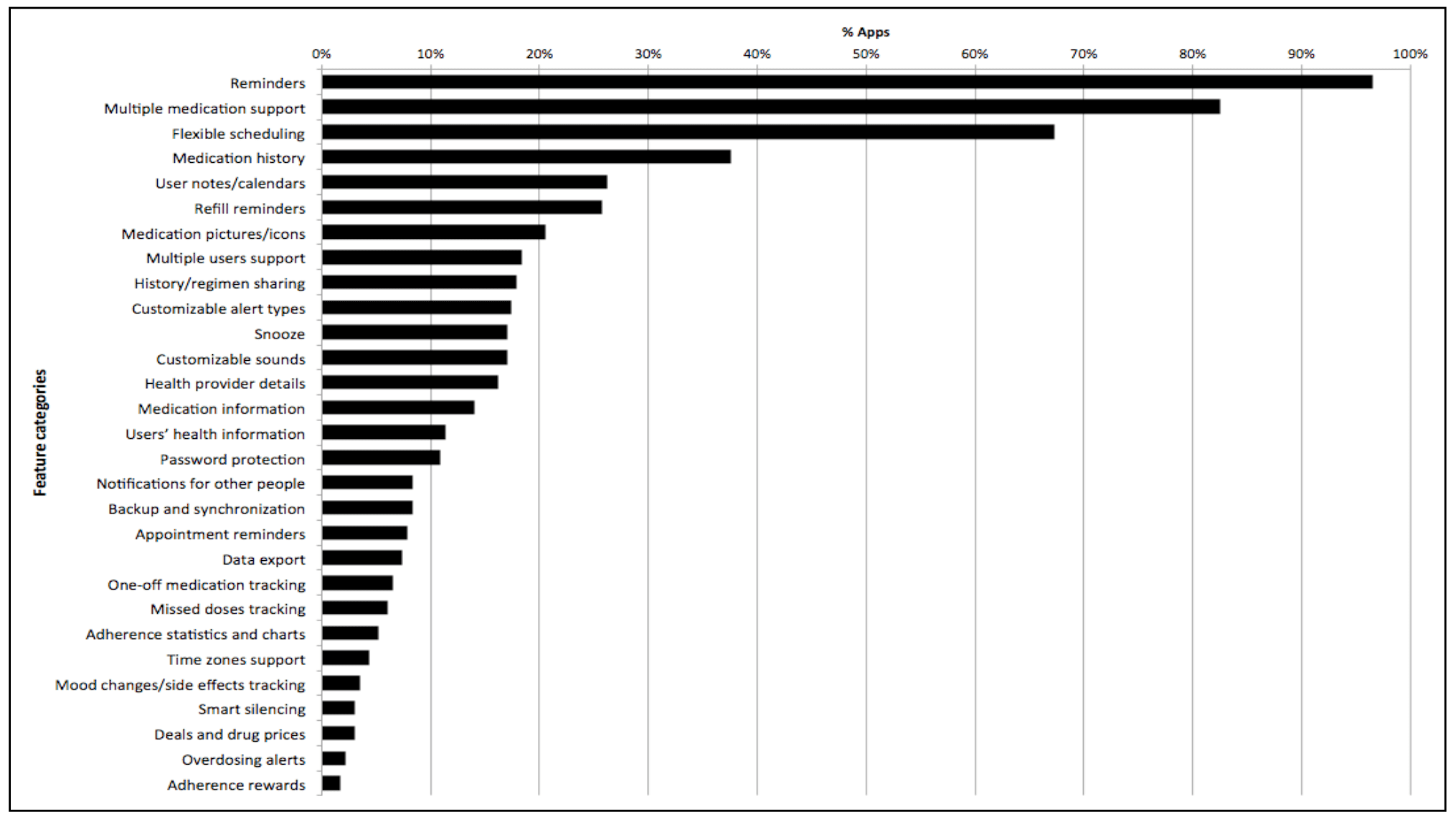
Every app required manual setup through long, confusing forms. Most were indistinguishable from a phone alarm. None supported irregular schedules, snooze actions, or visual pill identification.
"I have a medicine I take every 4 days, no app allows me to set this up easily!"
"Does nothing more than my phone's alarm. No snooze functionality if I am not around my medicine at the moment."
The gap was clear. Existing tools treated reminders as a standalone utility. None leveraged the ecosystem around the patient (the doctor, the prescription, the pharmacy) to eliminate setup friction entirely.
The design bet
Practo already had the infrastructure: doctors creating digital prescriptions, patients receiving them through the app, pharmacies fulfilling orders. The prescription contained everything a reminder needs. Medicine name, dosage, frequency, duration. The insight was simple: if the data already exists, the patient should never have to enter it again.
Auto-generated reminders from prescriptions
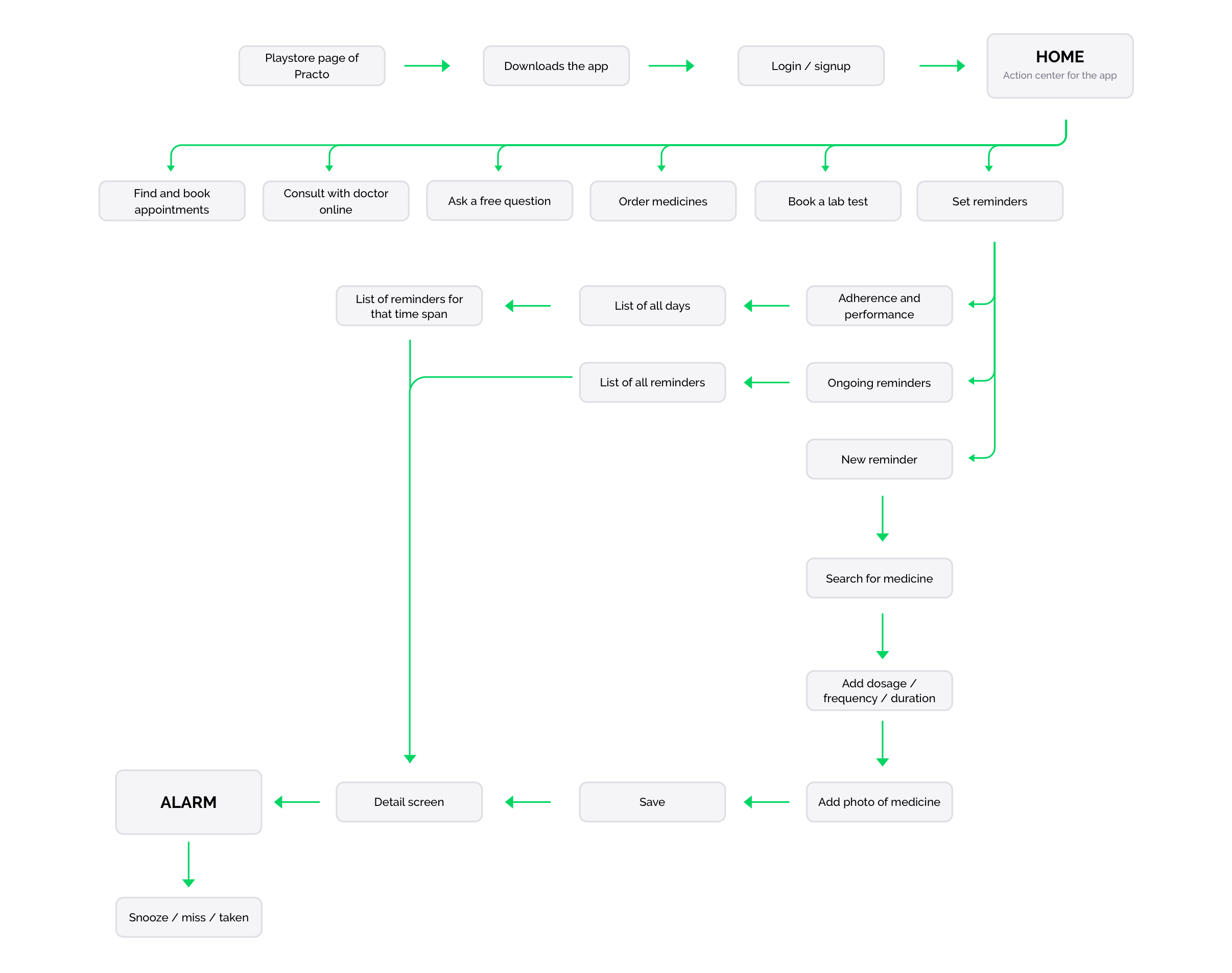
When a doctor shares a prescription through Practo, the system parses the medication data and creates reminders automatically on the patient's app. No forms, no configuration, no effort. The patient opens the app and their reminder schedule is already waiting.

Manual addition, simplified
For patients whose doctors are not on Practo, I designed a manual reminder flow built around smart defaults and flexible scheduling. The interface went through multiple rounds of testing and iteration to ensure it worked for users with minimal technical literacy, which represented a large share of Practo's patient base.
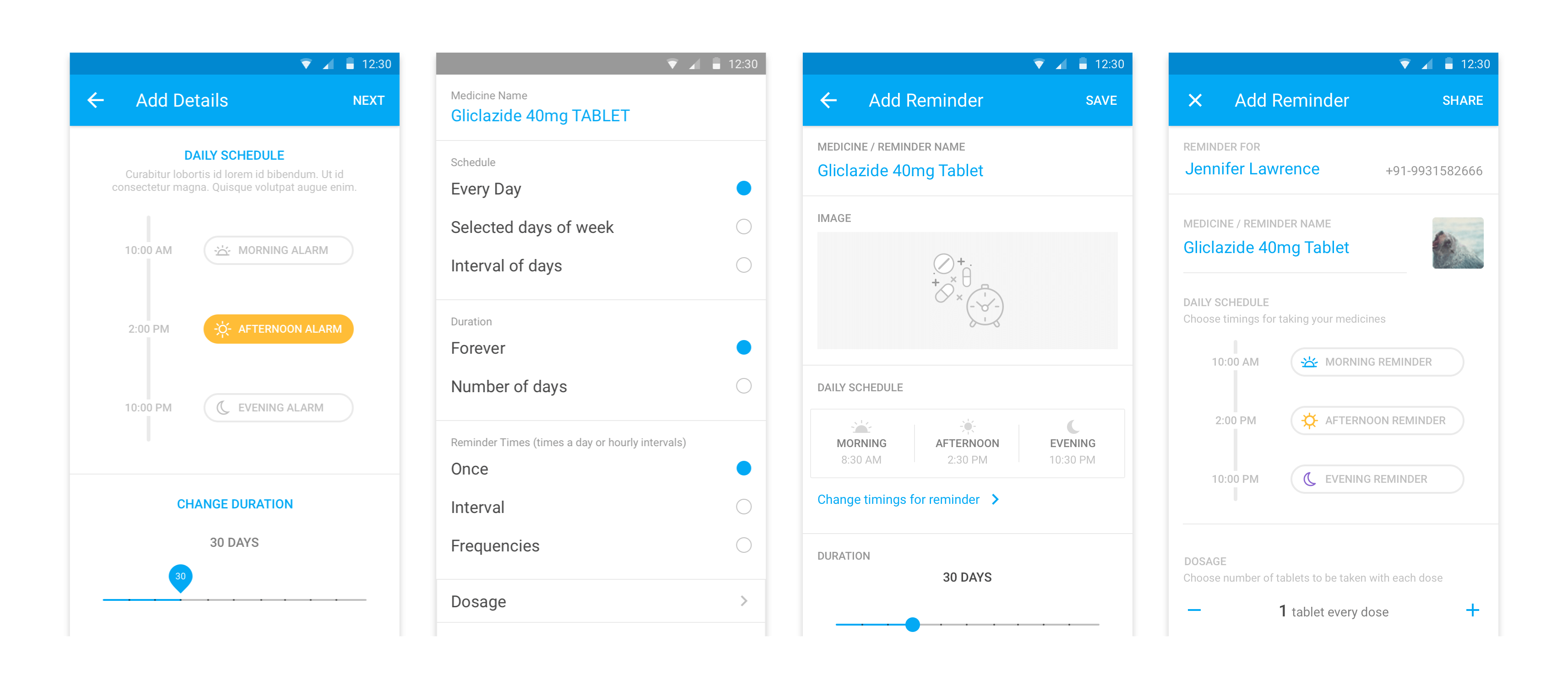
Notification framework
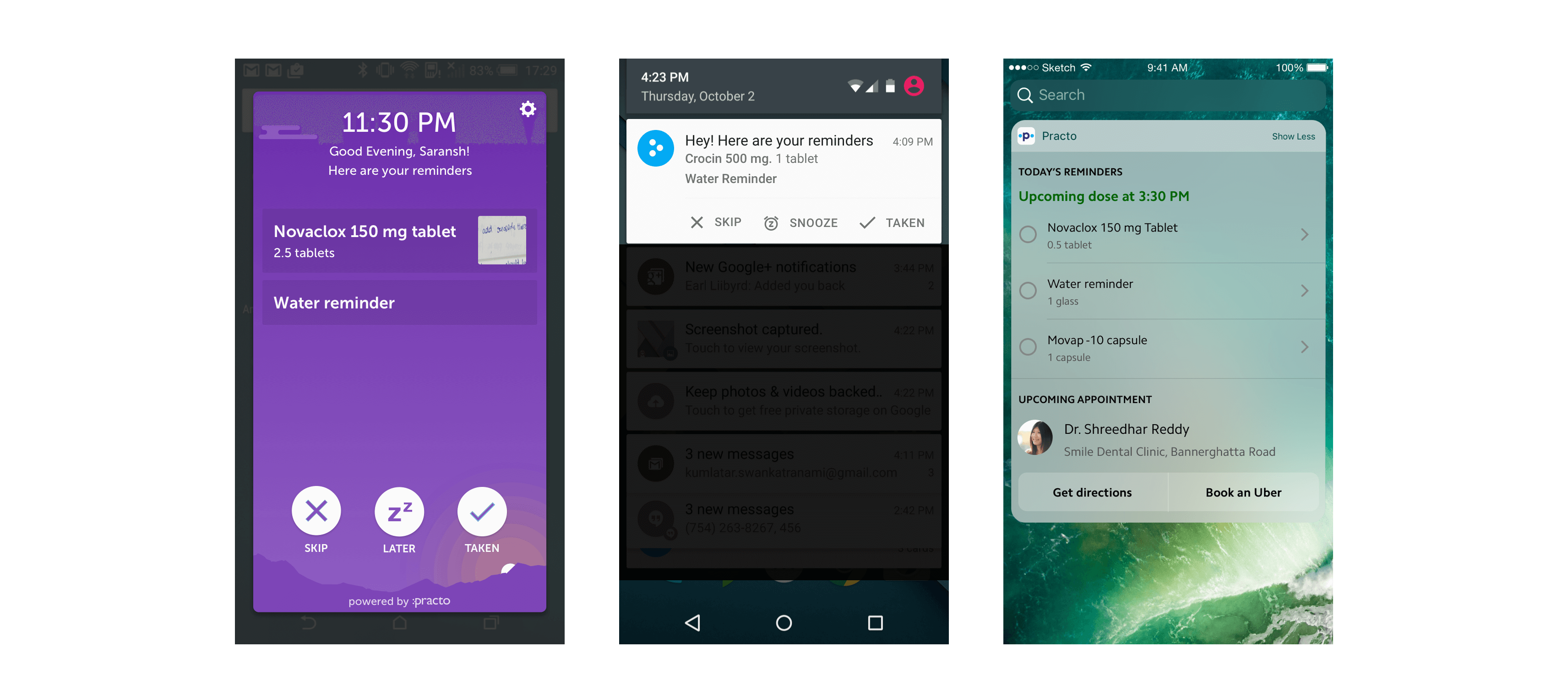
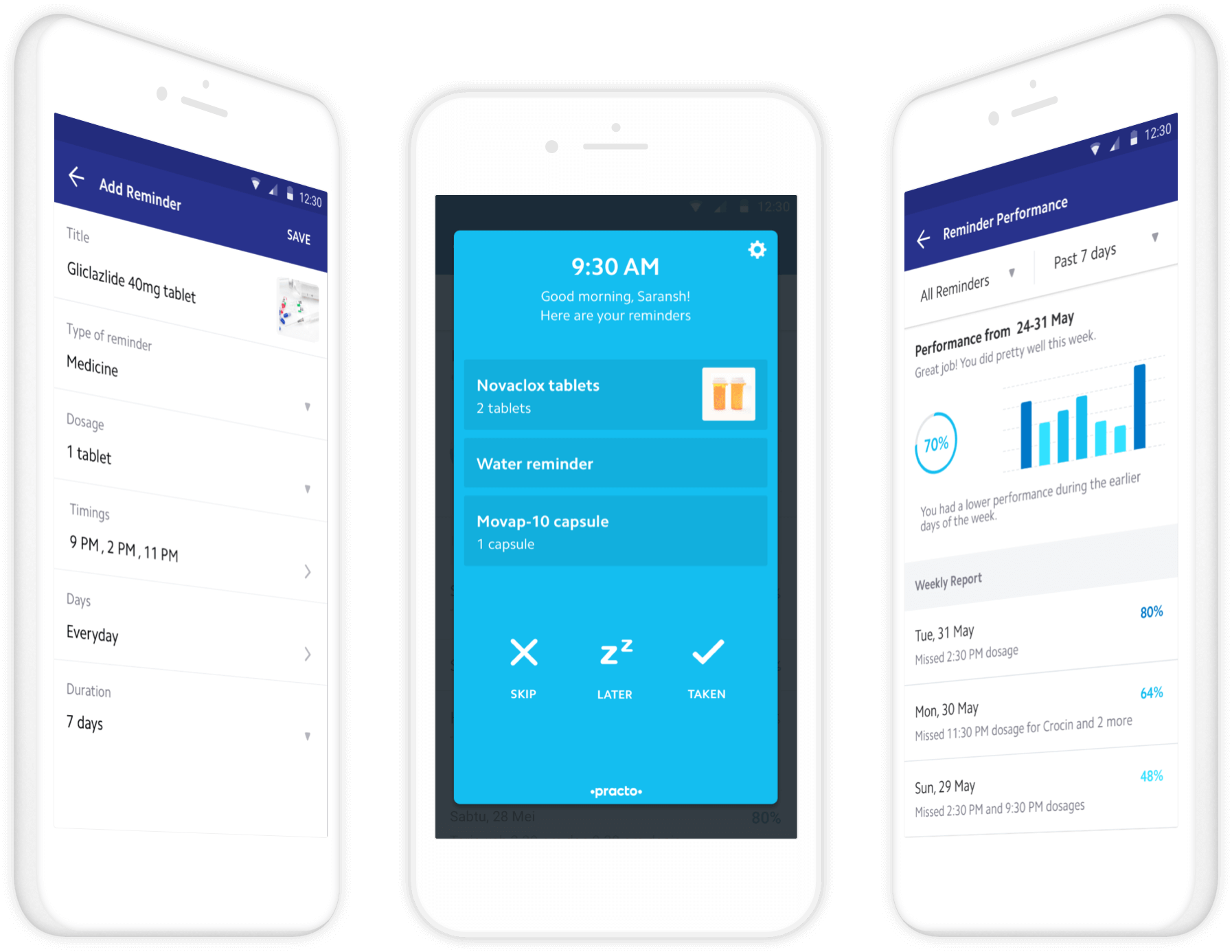
A reminder is only useful if it reaches the patient at the right moment with the right context. I designed an end-to-end notification framework that leveraged the mobile platform's native capabilities: rich notifications with medicine details, snooze actions, and adherence tracking so patients and their care network could monitor compliance over time.
What shipped
The first version launched in January 2016. Over the following year, multiple iterations refined the experience, each driven by patient feedback and adherence data. The priority was always the same: a minimum desirable experience, not a minimum viable one.
What changed
The feature validated a broader product thesis: in healthcare, the best interface is one the patient never has to think about. By leveraging data that already existed in the ecosystem, we eliminated the friction that had prevented every other reminder tool from achieving sustained adherence.