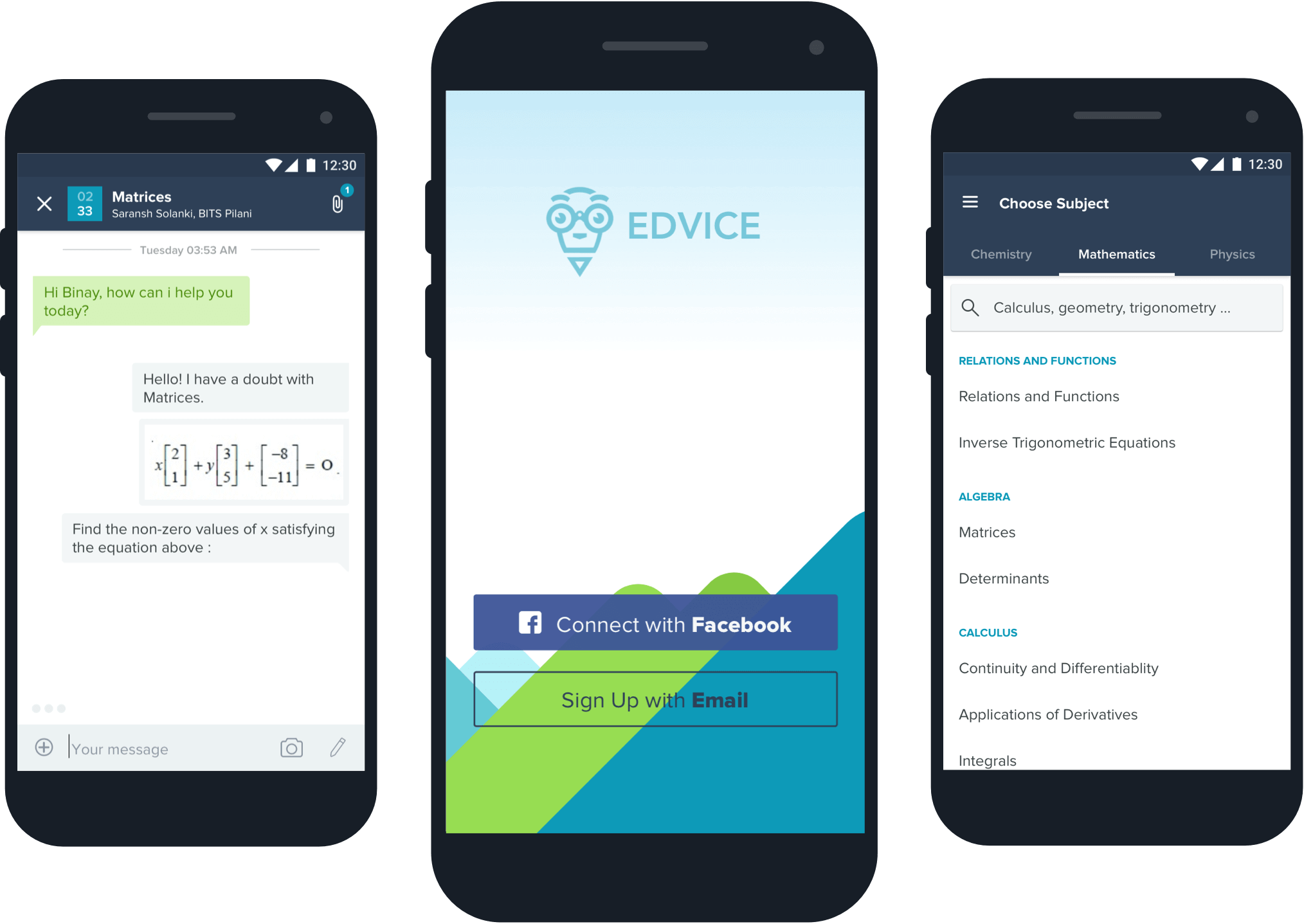
Every year, millions of Indian students prepare for competitive entrance exams. Most plateau without personal guidance. Edvice started as a dorm-room startup at BITS Pilani, pivoted from a failed B2B model, and rebuilt as a consumer platform that crowdsourced tutoring from top university students. The product was acquired by HashLearn and now serves over 500,000 students.
The problem
Millions of Indian high school students prepare annually for fiercely competitive entrance examinations: IIT-JEE, BITSAT, NEET. Despite enrolling in coaching institutes, most students lack the personal guidance needed to move beyond a performance plateau. Conventional coaching centres prioritize batch instruction over individual attention, leaving students without targeted feedback on their weaknesses.
We focused initially on students in top-tier cities with strong internet penetration around Pilani (Jaipur, New Delhi, Agra), later expanding to Bangalore and southern India. Through interviews with students and parents, a consistent pattern emerged: the absence of a dedicated, accessible tutor was the single biggest barrier to improvement.
The research surfaced critical data points:
- The best coaching institutes maintain a student-to-teacher ratio of 100:1
- Students spend an average of 6 hours 42 minutes on daily self-study, much of it stuck on unresolved doubts
- Students commute 105 minutes per day to coaching and other institutions
- An engineering-prep course costs approximately 1.2 lacs per year with uncertain outcomes
The findings confirmed a genuine need for an always-available tutor. Someone students could reach instantly when they hit a wall during self-study.
First attempt: Edulyft
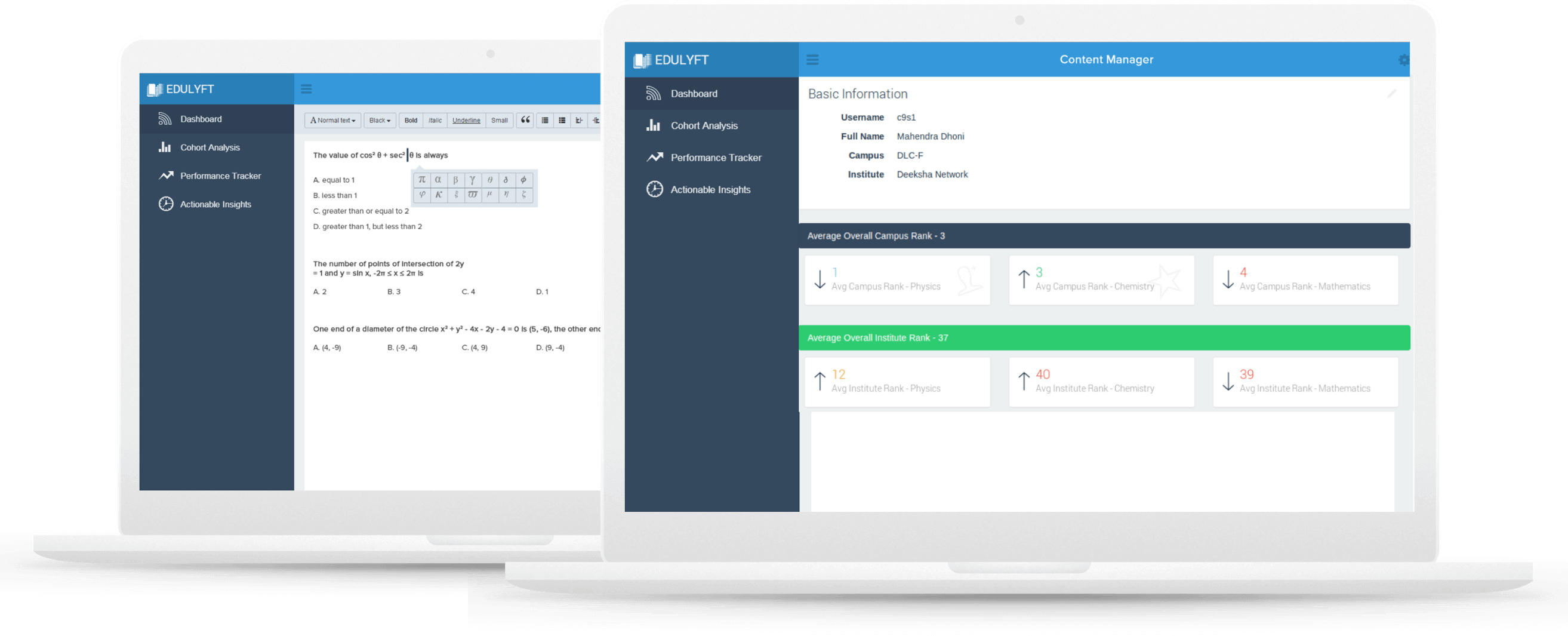
Our first approach was a SaaS solution for test prep institutions. Edulyft offered data-driven performance analysis with automated remediation, sold to coaching institutes on a per-student basis. The product included chapter-wise modules, adaptive testing, performance analytics, peer comparison, and remedial suggestions.
The product secured initial clients in Delhi and Jaipur but struggled to gain meaningful traction.
The pivot
Edulyft did not scale. Most coaching institutions viewed the product as misaligned with their business goals. Their definition of "personal attention" meant counseling a select group of top performers to secure marquee ranks, which drove the following year's enrollment. The institutional incentive structure simply did not reward serving the broader student base.
We pivoted to a consumer-centric model. The core insight was straightforward: thousands of students pass these entrance exams every year. They could serve as tutors for the next cohort. The platform would crowdsource tutoring, connecting students directly with qualified peers who had recently cleared the same exams.
Building Edvice
Architecture and flow
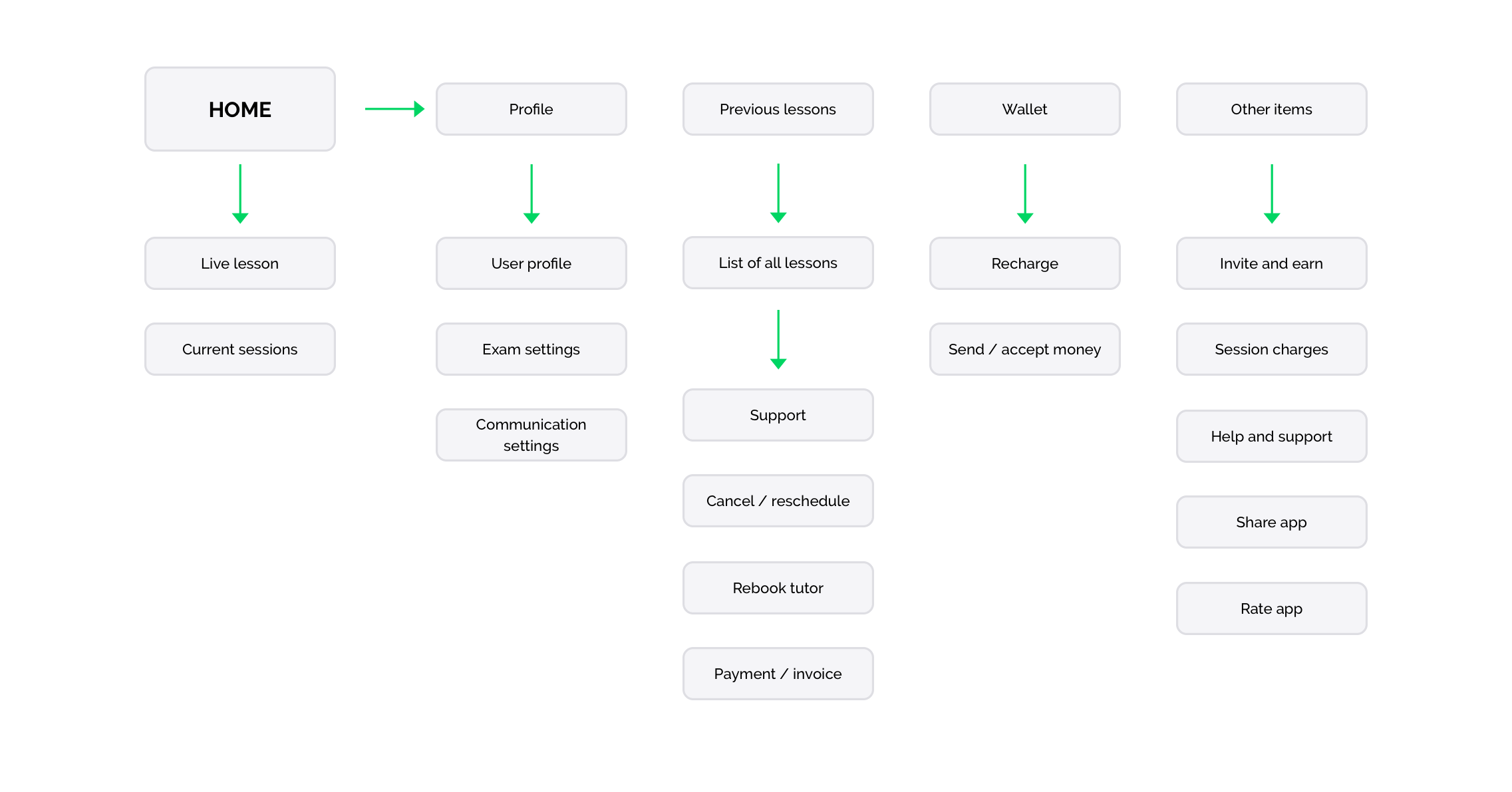
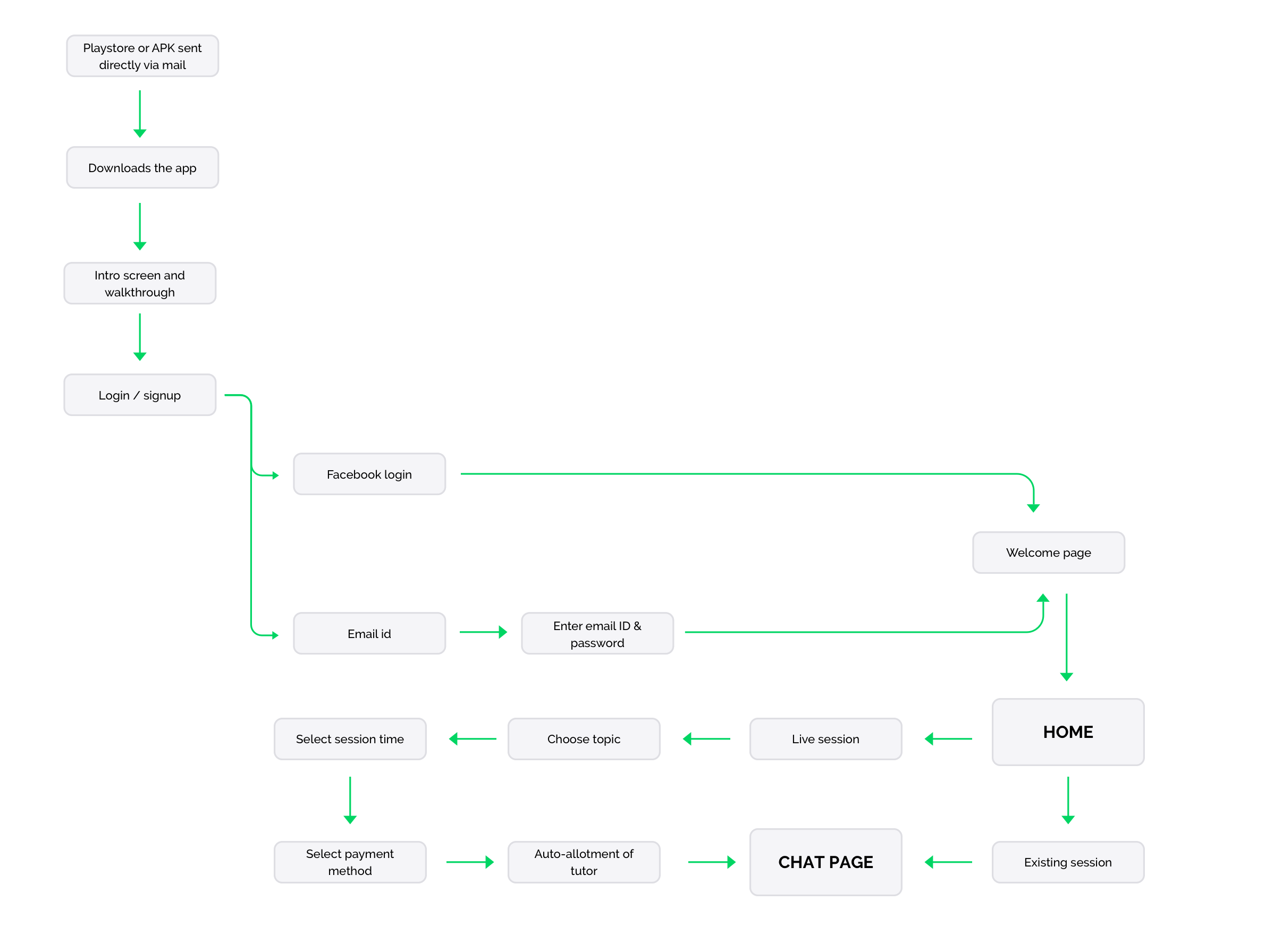
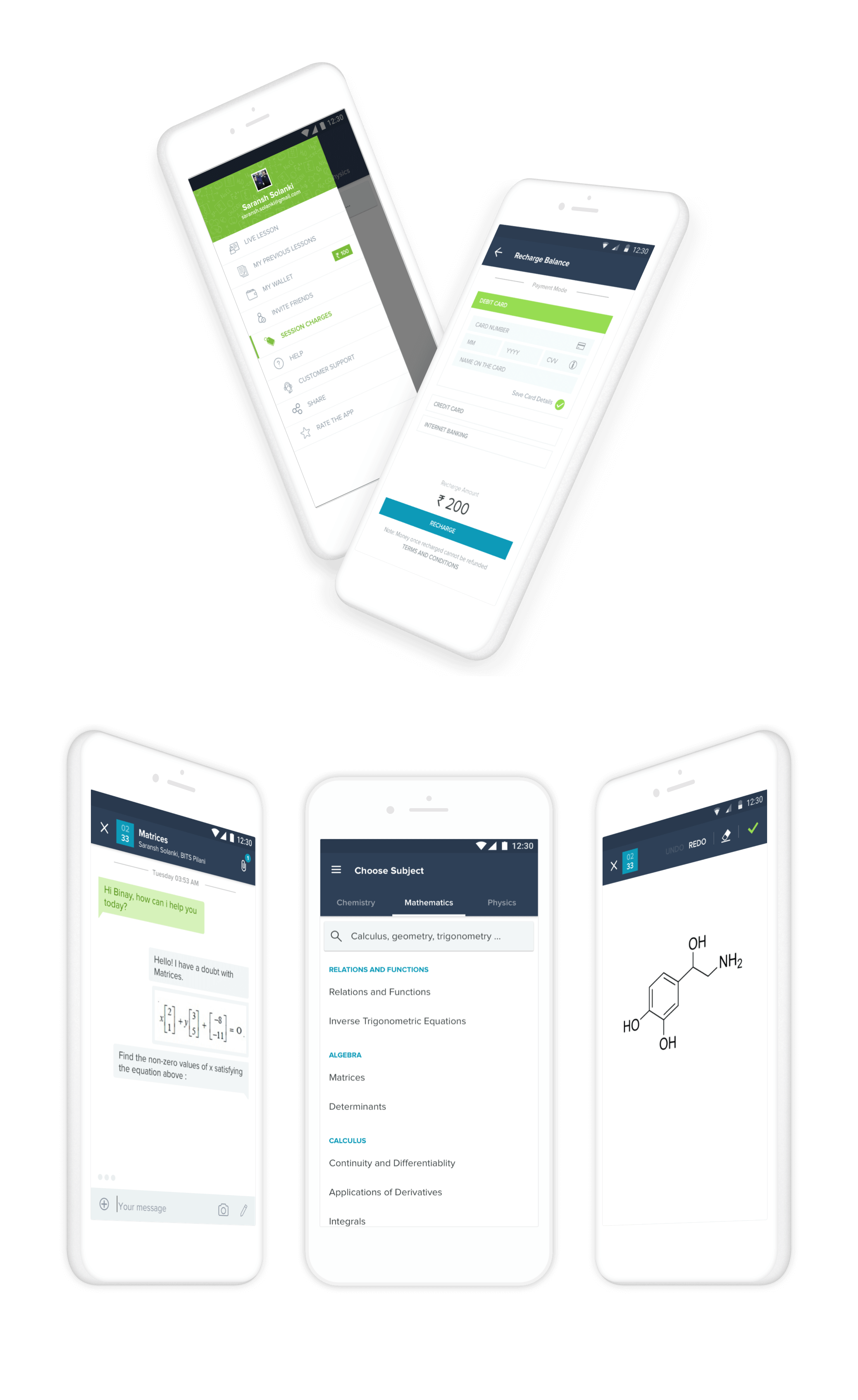
Edvice used a nested doll pattern that created linear user flows. The primary activity, booking a tutor and starting a chat session, became the home screen. Side navigation provided access to secondary flows.
User acquisition
Initial targeting focused on students, but research revealed that parents were often the primary decision-makers. This shifted our acquisition strategy toward reaching parents directly.
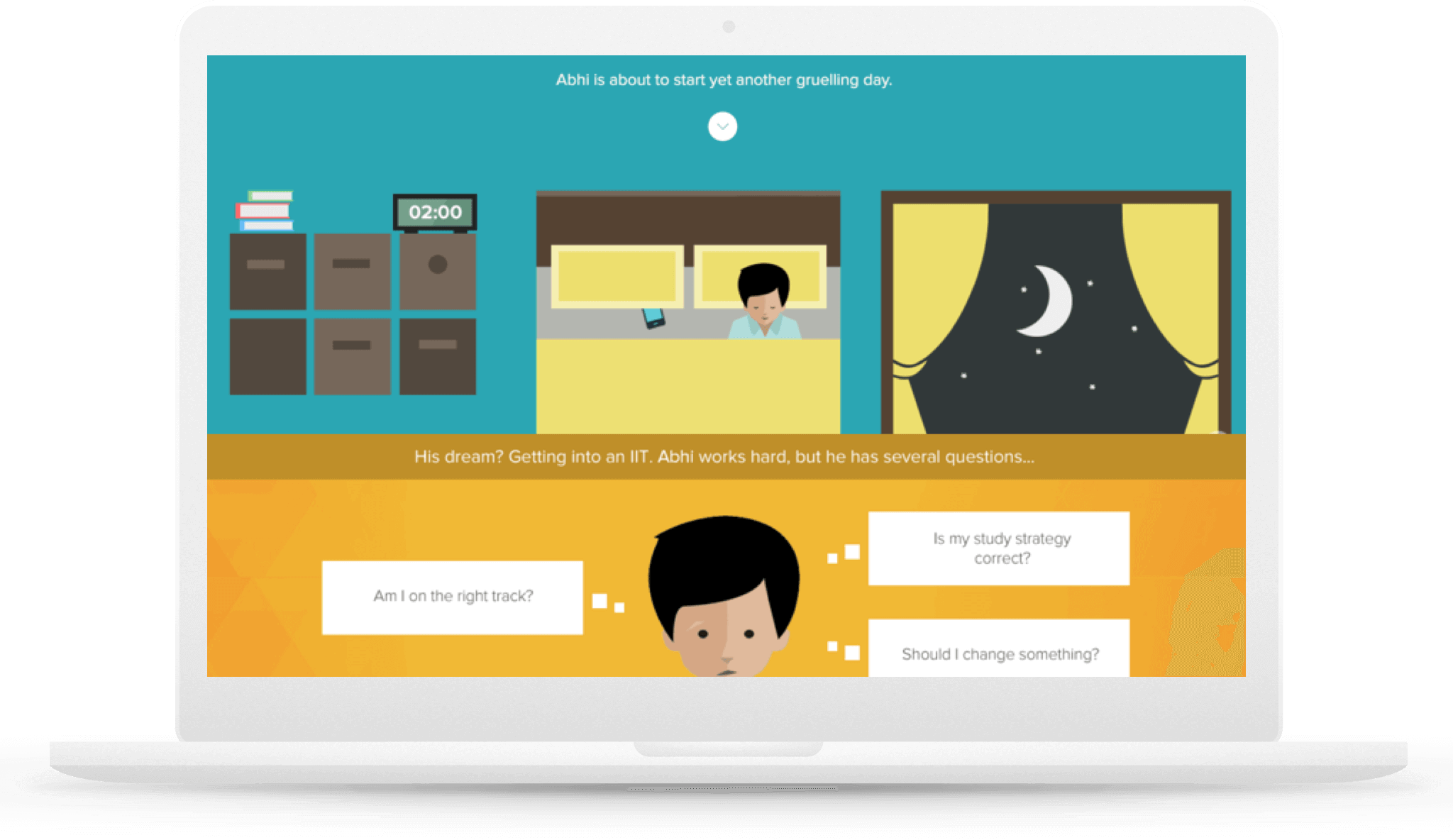
We created an interactive infographic showcasing the challenges facing engineering aspirants in India. It was viewed by 10,000 parents and students within a single day.
What shipped
The first version launched in February 2015. After assumption testing and iteration, the team raised a seed investment round and navigated the product to acquisition.
Outcome
The team achieved a successful exit through acquisition by HashLearn in June 2015, one of the few student-led acquisitions completed during undergraduate studies. The average team age was 21.
Post-acquisition, the product was rebranded to HashLearn Now. The platform is now used by over 500,000 tutors and students daily.
Featured story ↗